
When bacteria get below the gum line and harden into tartar, regular brushing cannot clean them.
This is where root planing (coupled with scaling) becomes necessary. Root planing is a restorative therapy designed to stop gum disease from getting worse and help your gums heal.
What is Root Planing?
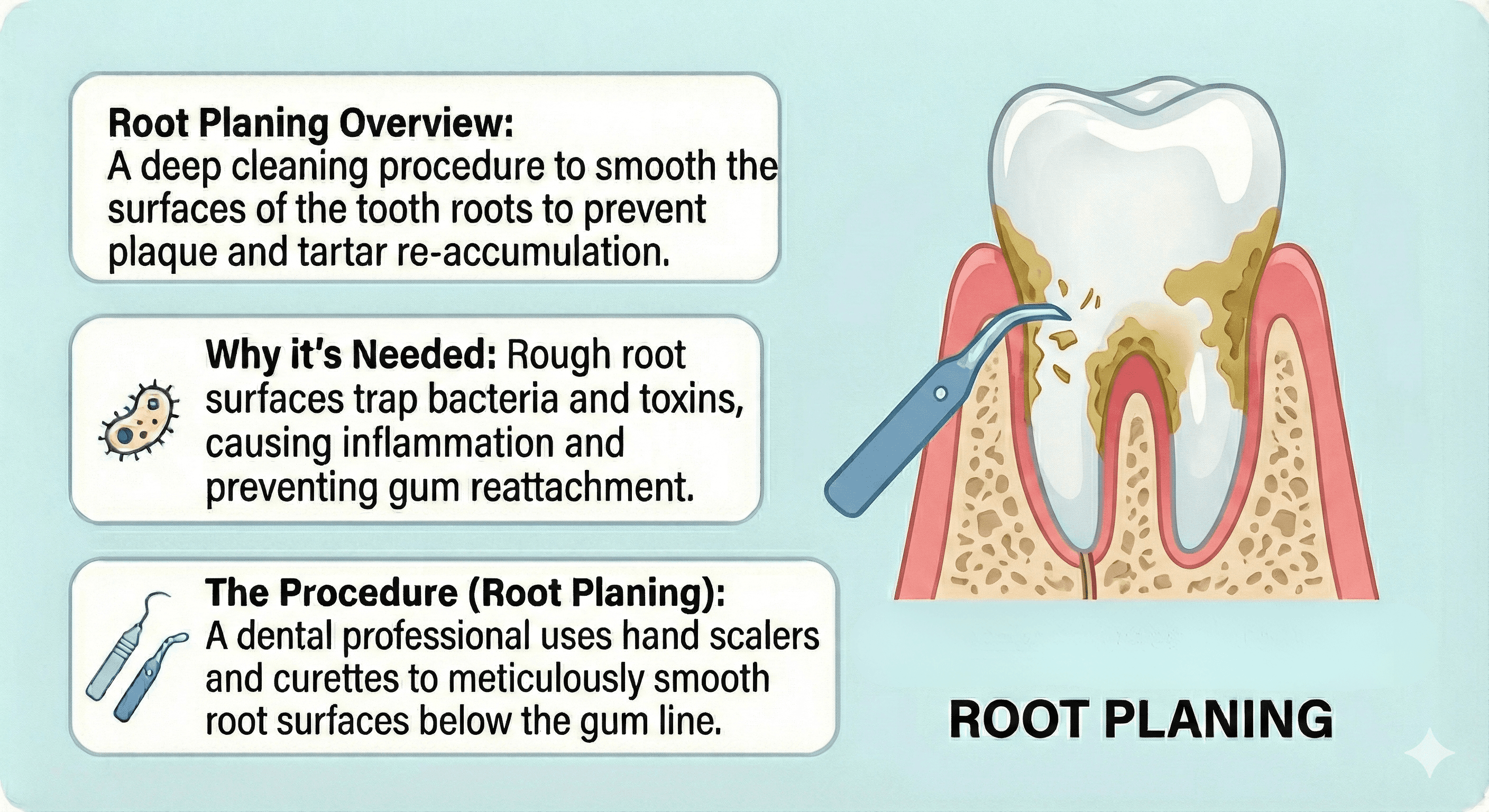
Root planing is a specialized deep-cleaning procedure. While a standard cleaning polishes the visible part of the tooth, root planing goes deeper (below the gum line).
Root planing involves the following:
Removing Toxins: Eliminating calculus (tartar) and bacterial toxins from the root surfaces below the gum line. This part is called scaling.
Smoothing Tooth Surfaces: Mechanically smoothing the rough spots on the tooth root. Bacteria grow better on rough, pitted areas. Smoothing the root prevents future bacteria from sticking.
Healing: Once the root is clean and smooth, your gums can heal and tighten back around the tooth, sealing out debris and preventing future infection.
Routine Cleaning vs. Root Planing: What’s the Difference?
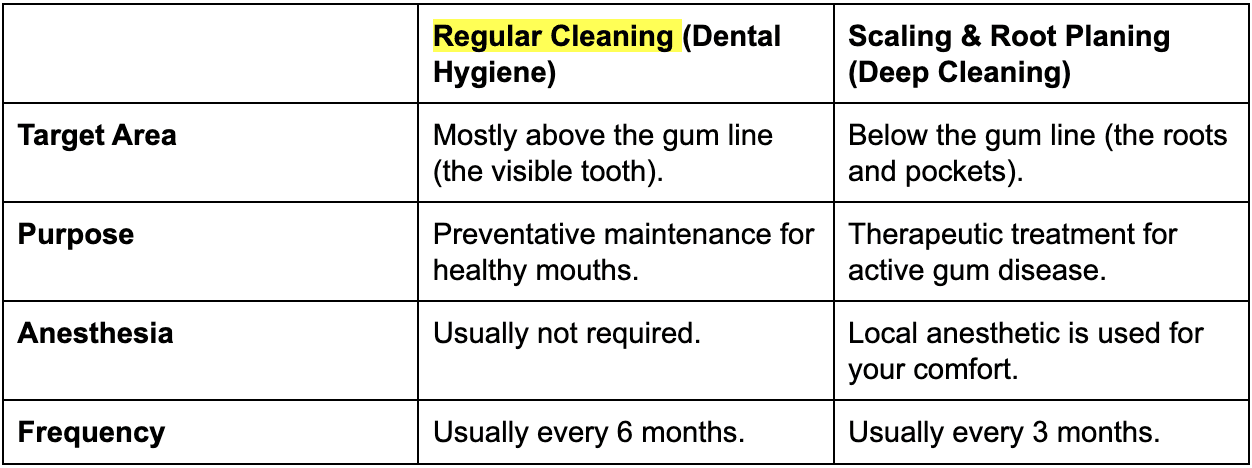
To help you understand why this treatment is distinct from your six-month dental cleaning, we’ve broken down the key differences:
When is Root Planing Necessary?
Because gum disease doesn’t have very many symptoms in its early stages, many patients don’t realize they need root planing until we provide a professional examination. However, your gums will often give you subtle warning signs.
You may be a candidate for root planing at Sovrle Dental Clinic if you experience:
Bleeding Gums: Bleeding during brushing or flossing is the most common early sign of gingivitis and gum disease.
Persistent Bad Breath: Bad breath (halitosis) that returns shortly after brushing usually indicates bacteria trapped deep under the gums.
Visible Inflammation: Gums that appear red, swollen, or feel tender to the touch.
Gum Recession: Teeth that look "longer" than usual because the gums are pulling back.
Note: gum recession may require a gum graft to heal.
Pocketing: During your dental exam, if we measure a gap of more than 3 millimeters between your tooth and gum, scaling is usually required.
What to Expect from Periodontal Treatment at Sovrle Dental Clinic
We know that periodontal treatment can cause anxiety. At Sovrle Dental Clinic, we prioritize transparency and your comfort.
Step 1: Comprehensive Exam & Consultation
We never guess when it comes to your health.
Your visit begins with a periodontal evaluation where we measure gum pocket depths and, if necessary, use digital imaging to visualize tartar deposits on the roots of your teeth.
Step 2: Prioritizing Patient Comfort
We understand that deep cleaning can cause anxiety for some.
Before we begin, we discuss pain management. Whether it is a topical desensitizing gel or a local anesthetic to completely numb the area, we ensure you don't feel discomfort during the deep cleaning process.
Step 3: The Scaling & Root Planing Process
We use a combination of ultrasonic devices (which use vibration and water irrigation) and precision hand instruments to remove tartar.
Scaling: Removes plaque and tartar from above and below the gum line.
Root Planing: This vital second step involves smoothing out the rough spots on the tooth root. Bacteria struggle to stick to smooth surfaces, which promotes rapid healing and reattachment of the gums.
Step 4: Healing & After Care Instructions
Once the bacteria is removed, your gums can finally begin to heal.
We will provide you with a customized home-care plan and schedule a follow-up appointment to monitor any gum disease.
Why Choose Sovrle Dental Clinic for Root Planing?
Modern Technology: We use modern dental technology to ensure the cleaning is thorough yet minimally invasive.
Education-First Approach: We don't just treat you; we teach you how to maintain your results at home to prevent recurrence.
Tailored Treatment Plans: We recognize that every mouth is different. We adapt our techniques to suit your specific level of sensitivity and gum health.
Prioritizing Your Comfort: We utilize effective local anesthesia and gentle techniques to ensure you remain relaxed and comfortable throughout the entire procedure.
Convenient Location & Access: We know your time is valuable. Centrally located at Yonge and Sheppard in North York, our clinic is easy to reach, making it simple to fit essential dental care into your busy schedule without the hassle.
Take the First Step Toward Healthier Gums
Don't ignore bleeding gums or persistent sensitivity. These are signs that your mouth needs help.
At Sovrle Dental Clinic in North York, we are ready to help you stop gum disease and restore your oral health.
Contact us today to schedule your periodontal evaluation (416) 491-2117.
Frequently Asked Questions About Root Planing
How do I know if I need periodontal treatment?
Your gums will give you warning signs. Look for these things:
Bleeding gums: You see blood when you brush or floss.
Swelling: Your gums look red or puffy.
Bad Breath: You have bad breath that does not go away.
Receding Gums: Your gums look like they are pulling away from your teeth.
Loose Teeth: Your teeth feel loose or like they are moving. If you see any of these, call us so a dentist can check your gums.
Does root planing hurt?
We want you to be comfortable! We use anesthetic to numb your gums completely before we start.
This means you should feel very little or no pain while our team cleans deep under your gums.
How long does periodontal treatment take?
It depends on how much cleaning you need:
One Area: If only one part of your mouth needs cleaning, it usually takes about 45 minutes to 1 hour.
Whole Mouth: If your whole mouth needs cleaning, we might split it into 2 to 4 visits. This keeps you comfortable. We will tell you exactly how many visits you need during your check-up.
What happens after periodontal treatment?
Your gums might feel a little sore or sensitive for a few days. This is normal—it means your gums are starting to heal! Here is how you can help your gums heal:
Brush Gently: Use a soft toothbrush.
Watch Your Food: Avoid very hot or very cold foods for a day or two.
Rinse: Rinse your mouth with warm salt water to keep it clean.
Medicine: Take medicine if we recommend it for soreness. Most people feel much better in a few days. Your gums will stop bleeding and look pink again!
What is the recovery like after root planing?
Recovery is generally mild. You can expect:
Light Sensitivity: Your teeth may be sensitive to cold water for a few days.
Some Tenderness: The gums may feel slightly tender, similar to how a muscle feels after a workout.
Reduced Swelling: Within a week, you will likely notice your gums look much less red and feel firmer.
Can gum disease come back after root planing treatment?
Root planing creates a clean slate, but maintenance is an ongoing process.
If you maintain excellent home care and stick to a periodontal maintenance schedule (usually every 3-4 months initially), gum disease can be managed effectively.
When bacteria get below the gum line and harden into tartar, regular brushing cannot clean them.
This is where root planing (coupled with scaling) becomes necessary. Root planing is a restorative therapy designed to stop gum disease from getting worse and help your gums heal.
What is Root Planing?
Root planing is a specialized deep-cleaning procedure. While a standard cleaning polishes the visible part of the tooth, root planing goes deeper (below the gum line).
Root planing involves the following:
Removing Toxins: Eliminating calculus (tartar) and bacterial toxins from the root surfaces below the gum line. This part is called scaling.
Smoothing Tooth Surfaces: Mechanically smoothing the rough spots on the tooth root. Bacteria grow better on rough, pitted areas. Smoothing the root prevents future bacteria from sticking.
Healing: Once the root is clean and smooth, your gums can heal and tighten back around the tooth, sealing out debris and preventing future infection.
Routine Cleaning vs. Root Planing: What’s the Difference?
To help you understand why this treatment is distinct from your six-month dental cleaning, we’ve broken down the key differences:
When is Root Planing Necessary?
Because gum disease doesn’t have very many symptoms in its early stages, many patients don’t realize they need root planing until we provide a professional examination. However, your gums will often give you subtle warning signs.
You may be a candidate for root planing at Sovrle Dental Clinic if you experience:
Bleeding Gums: Bleeding during brushing or flossing is the most common early sign of gingivitis and gum disease.
Persistent Bad Breath: Bad breath (halitosis) that returns shortly after brushing usually indicates bacteria trapped deep under the gums.
Visible Inflammation: Gums that appear red, swollen, or feel tender to the touch.
Gum Recession: Teeth that look "longer" than usual because the gums are pulling back.
Note: gum recession may require a gum graft to heal.
Pocketing: During your dental exam, if we measure a gap of more than 3 millimeters between your tooth and gum, scaling is usually required.
What to Expect from Periodontal Treatment at Sovrle Dental Clinic
We know that periodontal treatment can cause anxiety. At Sovrle Dental Clinic, we prioritize transparency and your comfort.
Step 1: Comprehensive Exam & Consultation
We never guess when it comes to your health.
Your visit begins with a periodontal evaluation where we measure gum pocket depths and, if necessary, use digital imaging to visualize tartar deposits on the roots of your teeth.
Step 2: Prioritizing Patient Comfort
We understand that deep cleaning can cause anxiety for some.
Before we begin, we discuss pain management. Whether it is a topical desensitizing gel or a local anesthetic to completely numb the area, we ensure you don't feel discomfort during the deep cleaning process.
Step 3: The Scaling & Root Planing Process
We use a combination of ultrasonic devices (which use vibration and water irrigation) and precision hand instruments to remove tartar.
Scaling: Removes plaque and tartar from above and below the gum line.
Root Planing: This vital second step involves smoothing out the rough spots on the tooth root. Bacteria struggle to stick to smooth surfaces, which promotes rapid healing and reattachment of the gums.
Step 4: Healing & After Care Instructions
Once the bacteria is removed, your gums can finally begin to heal.
We will provide you with a customized home-care plan and schedule a follow-up appointment to monitor any gum disease.
Why Choose Sovrle Dental Clinic for Root Planing?
Modern Technology: We use modern dental technology to ensure the cleaning is thorough yet minimally invasive.
Education-First Approach: We don't just treat you; we teach you how to maintain your results at home to prevent recurrence.
Tailored Treatment Plans: We recognize that every mouth is different. We adapt our techniques to suit your specific level of sensitivity and gum health.
Prioritizing Your Comfort: We utilize effective local anesthesia and gentle techniques to ensure you remain relaxed and comfortable throughout the entire procedure.
Convenient Location & Access: We know your time is valuable. Centrally located at Yonge and Sheppard in North York, our clinic is easy to reach, making it simple to fit essential dental care into your busy schedule without the hassle.
Take the First Step Toward Healthier Gums
Don't ignore bleeding gums or persistent sensitivity. These are signs that your mouth needs help.
At Sovrle Dental Clinic in North York, we are ready to help you stop gum disease and restore your oral health.
Contact us today to schedule your periodontal evaluation (416) 491-2117.
Frequently Asked Questions About Root Planing
How do I know if I need periodontal treatment?
Your gums will give you warning signs. Look for these things:
Bleeding gums: You see blood when you brush or floss.
Swelling: Your gums look red or puffy.
Bad Breath: You have bad breath that does not go away.
Receding Gums: Your gums look like they are pulling away from your teeth.
Loose Teeth: Your teeth feel loose or like they are moving. If you see any of these, call us so a dentist can check your gums.
Does root planing hurt?
We want you to be comfortable! We use anesthetic to numb your gums completely before we start.
This means you should feel very little or no pain while our team cleans deep under your gums.
How long does periodontal treatment take?
It depends on how much cleaning you need:
One Area: If only one part of your mouth needs cleaning, it usually takes about 45 minutes to 1 hour.
Whole Mouth: If your whole mouth needs cleaning, we might split it into 2 to 4 visits. This keeps you comfortable. We will tell you exactly how many visits you need during your check-up.
What happens after periodontal treatment?
Your gums might feel a little sore or sensitive for a few days. This is normal—it means your gums are starting to heal! Here is how you can help your gums heal:
Brush Gently: Use a soft toothbrush.
Watch Your Food: Avoid very hot or very cold foods for a day or two.
Rinse: Rinse your mouth with warm salt water to keep it clean.
Medicine: Take medicine if we recommend it for soreness. Most people feel much better in a few days. Your gums will stop bleeding and look pink again!
What is the recovery like after root planing?
Recovery is generally mild. You can expect:
Light Sensitivity: Your teeth may be sensitive to cold water for a few days.
Some Tenderness: The gums may feel slightly tender, similar to how a muscle feels after a workout.
Reduced Swelling: Within a week, you will likely notice your gums look much less red and feel firmer.
Can gum disease come back after root planing treatment?
Root planing creates a clean slate, but maintenance is an ongoing process.
If you maintain excellent home care and stick to a periodontal maintenance schedule (usually every 3-4 months initially), gum disease can be managed effectively.